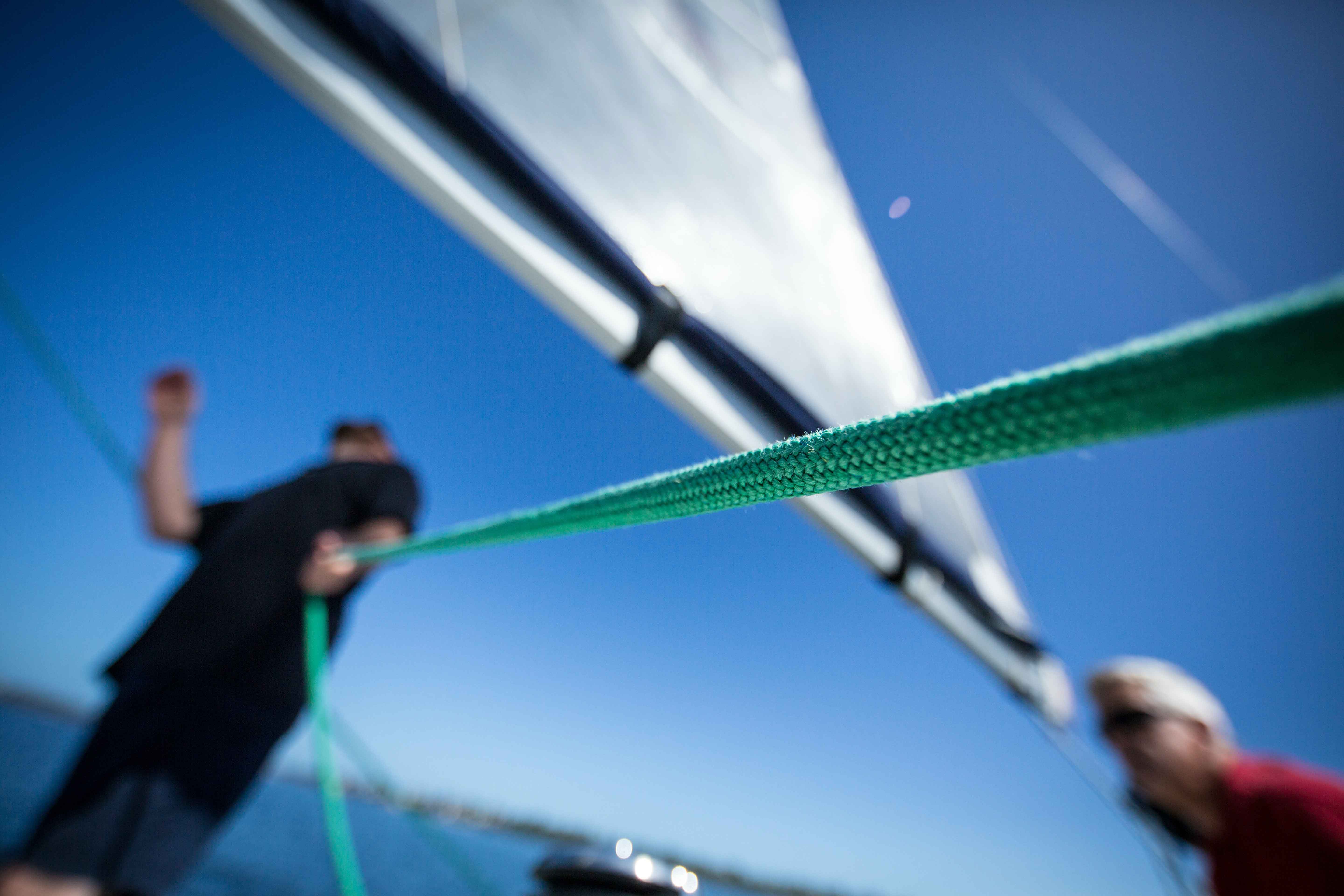
Close-hauled
Close-hauled is when the yacht is sailing as close to the wind as possible. The sails are positioned so that they are nearly parallel to the wind, and the yacht moves forward at an angle to the wind. This point of sail is the closest to the wind, and it is the most efficient way to sail upwind. However, it is also the slowest point of sail, and it requires constant adjustments to the sails and the rudder to maintain the correct angle to the wind.
Close reach
Close reach is when the yacht is sailing with the wind coming from a slightly off-center direction. The sails are positioned so that they are slightly angled to the wind, and the yacht moves forward with a slight angle to the wind. This point of sail is faster than close-hauled, and it is still relatively efficient.
Beam reach
Beam reach is when the yacht is sailing perpendicular to the wind. The sails are positioned so that they are perpendicular to the wind, and the yacht moves forward with the wind at a 90-degree angle to its side. This point of sail is the fastest and most efficient way to sail on a broad reach.
Broad reach
Broad reach is when the yacht is sailing with the wind coming from behind. The sails are positioned so that they are angled away from the wind, and the yacht moves forward with the wind at an angle behind it. This point of sail is faster than beam reach, but it is less efficient.
Downwind
Downwind is when the yacht is sailing directly downwind. The sails are positioned so that they are nearly parallel to the wind, and the yacht moves forward with the wind directly behind it. This point of sail is the fastest, but it requires careful attention to prevent an accidental jibe.
Originally published on the Mallorca Sailing Academy Journal. Share your thoughts, questions, and experiences below!